
Machinery Moving Risk and Operations Planning
Centre of gravity, lifting points, floor capacity and repositioning steps explained.
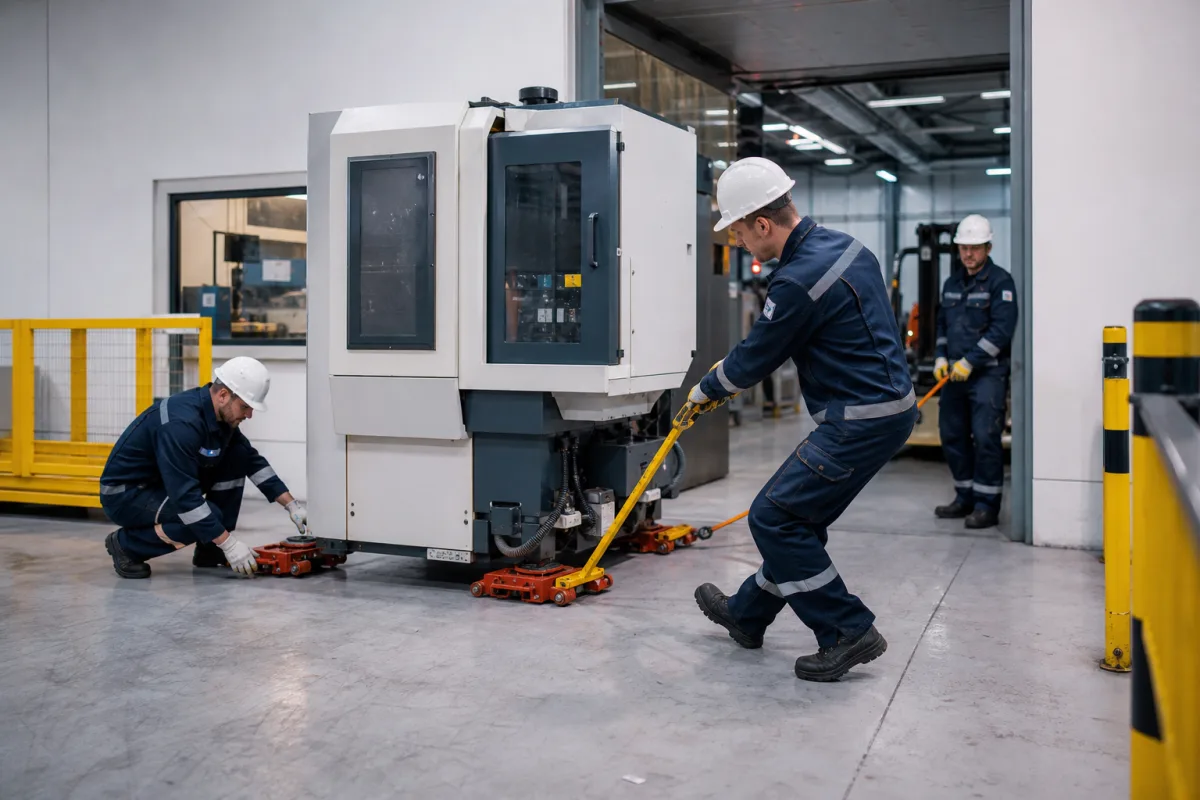
Before machinery is moved, weight, dimensions, centre of gravity, lifting points, route and floor capacity must be verified together.
Why does proper planning matter?
Transport is more than moving items between two points. Cargo type, building access, distance, time window and protection requirements must meet in one operating plan. Accurate early information helps match vehicle capacity, crew size and equipment to the real need.
Practical steps
- 1
Verify technical sheet, weight and dimensions.
- 2
Plan authorised disconnection of utilities.
- 3
Match lifting points with equipment capacity.
- 4
Survey the route and floor loading.
- 5
Record levelling, anchoring and handover at destination.
Information to share before a quote
- Origin and destination, floors and lift access
- Inventory, approximate volume and fragile items
- Parking access, carry distance and building hours
- Preferred date window and delivery priorities
- Packing, disassembly/reassembly or specialist equipment
Photo and video information is fast; for complex access or specialist cargo, an on-site survey identifies operational risk more accurately. We finalise the plan after validating cargo and address conditions.
Conclusion
Before machinery is moved, weight, dimensions, centre of gravity, lifting points, route and floor capacity must be verified together. Confirming the scope in writing reduces uncertainty on moving day and keeps everyone working from the same plan.